Modern accounts receivable (AR) teams are facing a challenge that rarely appears on balance sheets but affects cash flow every day: the finance inbox bottleneck AR problem. As businesses grow, communication volumes increase across email, portals, shared inboxes, payment systems, and customer service channels. What begins as a manageable workflow can quickly turn into a tangled web of unanswered messages, delayed approvals, disputed invoices, and missed follow-ups.
For entrepreneurs, finance leaders, and enterprise managers, this bottleneck creates more than operational frustration. It slows collections, strains customer relationships, and increases Days Sales Outstanding (DSO). In many organizations, managing inbound AR communications has become just as important as issuing invoices themselves.
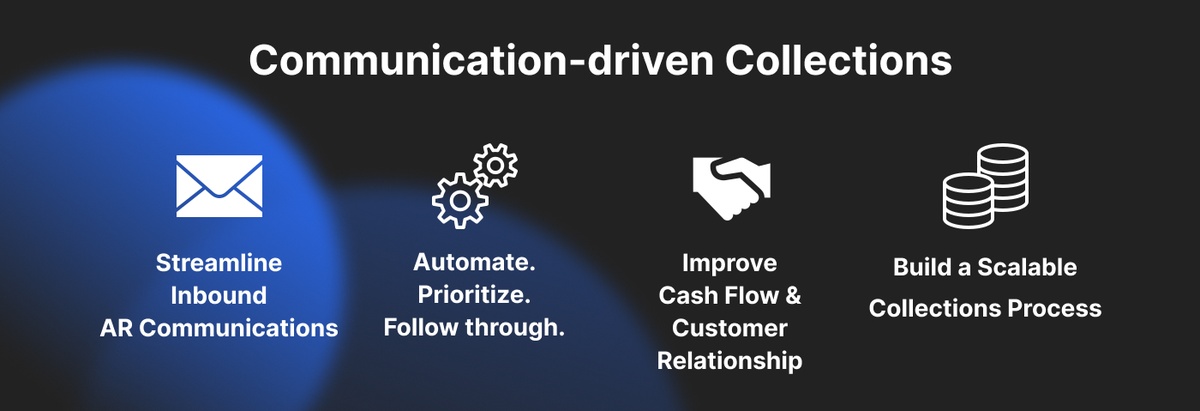
The good news is that businesses are beginning to rethink collections through a communication-driven approach. Instead of treating collections as a purely financial process, companies are recognizing that responsiveness, coordination, and communication visibility directly influence recovery rates and customer satisfaction.
This article explores why finance inbox congestion happens, how it impacts AR performance, and what businesses can do to build faster, smarter, and more scalable collections operations.
Why the Finance Inbox Bottleneck Happens
The average finance team now handles far more than payment reminders. AR departments routinely manage:
- Invoice disputes
- Payment confirmations
- Vendor documentation requests
- Billing corrections
- Credit hold discussions
- Legal escalations
- Internal approvals
- Customer payment plans
As companies expand across regions and systems, communication becomes fragmented. One customer might email accounting directly, another may use a support portal, while a third contacts a sales representative who forwards the issue days later.
The result is a communication overload that creates several operational risks:
| Problem |
Business Impact |
| Delayed responses |
Slower payments |
| Lost emails |
Missed collections opportunities |
| Unclear ownership |
Internal confusion |
| Duplicate follow-ups |
Poor customer experience |
| Incomplete records |
Compliance and audit issues |
| Manual tracking |
Reduced team productivity |
Many organizations still rely on shared inboxes such as collections@company.com or ar@company.com without structured workflows. While this may work temporarily, inbox-based operations become difficult to scale once message volume increases.
The bottleneck is not always caused by insufficient staffing. In many cases, the issue stems from disconnected communication processes.
The Hidden Cost of Poor AR Communication
Most finance leaders focus on metrics such as DSO, bad debt write-offs, and aging reports. However, communication inefficiencies often sit upstream of those problems.
When inbound AR communications are poorly managed, several costly outcomes emerge.
1. Cash Flow Delays
An unpaid invoice is not always the result of unwillingness to pay. Frequently, payment is delayed because:
- A customer requested corrected documentation
- A dispute was never routed correctly
- A payment confirmation went unnoticed
- An internal stakeholder failed to respond
Even small delays can compound significantly across hundreds or thousands of invoices.
2. Customer Frustration
Customers expect fast, coordinated communication. Repeating information across multiple emails or receiving conflicting responses damages trust.
Collections efforts become less effective when customers feel ignored or misunderstood.
3. Burnout Within Finance Teams
AR specialists often spend hours manually sorting emails, updating spreadsheets, and forwarding requests internally. This repetitive work reduces time available for strategic collections activity.
In large enterprises, communication overload can also contribute to employee turnover and reduced morale.
4. Increased Risk of Bad Debt
When communication breaks down entirely, unresolved invoices may age into serious delinquency. At that stage, recovery becomes more expensive and legally complex.
A communication-driven collections strategy helps organizations intervene earlier and more effectively.
What Is Communication-Driven Collections?
Communication-driven collections is an approach that places communication management at the center of AR operations.
Rather than treating inbound messages as secondary administrative tasks, businesses build workflows specifically designed to:
- Organize AR communication
- Improve response speed
- Create visibility across teams
- Reduce disputes
- Escalate issues efficiently
- Preserve customer relationships
This model recognizes a simple truth: collections success depends heavily on how quickly and clearly businesses communicate.
The approach combines people, process, and technology to ensure every payment-related interaction is tracked and actionable.
Key Signs Your Business Has a Finance Inbox Bottleneck AR Problem
Many businesses do not realize the extent of the issue until collections performance declines noticeably.
Here are common warning signs:
High Volume of Unanswered Emails
If finance inboxes regularly contain unread messages older than 48 hours, operational risk is increasing.
Frequent "Did You Receive My Email?" Follow-Ups
Repeated customer follow-ups often indicate communication gaps and unclear ownership.
Manual Spreadsheet Tracking
When AR teams rely heavily on spreadsheets to monitor conversations, disputes, or escalations, scalability becomes limited.
Long Dispute Resolution Cycles
Delayed invoice dispute resolution often stems from fragmented communication between finance, sales, and operations.
Customer Complaints About Billing Communication
Poor communication can negatively impact retention and customer satisfaction scores.
Best Practices for Managing Inbound AR Communications
Improving managing inbound AR communications requires more than adding staff. Businesses need structured systems that reduce friction and improve accountability.
Centralize Communication Channels
One of the most effective improvements is consolidating customer communication into centralized workflows.
This does not necessarily mean using a single inbox. Instead, organizations should create unified visibility across channels so finance teams can track conversations consistently.
A centralized approach helps businesses:
- Prevent duplicate responses
- Track issue ownership
- Improve collaboration
- Maintain historical records
Implement Ticketing or Workflow Systems
Treating AR inquiries like support tickets can dramatically improve response management.
Each inquiry should include:
- Assigned ownership
- Priority level
- Due dates
- Status tracking
- Escalation rules
This creates accountability and prevents issues from disappearing into inbox clutter.
Use Automation for Routine Tasks
Automation can reduce repetitive communication work significantly.
Examples include:
- Automated payment reminders
- Status acknowledgments
- Invoice delivery confirmations
- Payment receipt notifications
- Escalation triggers
Automation improves consistency while freeing AR professionals to focus on complex collections activities.
Align Finance and Customer-Facing Teams
Many collection delays happen because sales, customer success, and finance operate in silos.
Successful organizations establish shared communication processes between departments to ensure:
- Disputes are resolved quickly
- Customer context is visible
- Escalations are coordinated
- Payment commitments are documented
Cross-functional visibility is essential for enterprise collections efficiency.
Technology's Role in Modern Collections Operations
Technology has become central to solving the finance inbox bottleneck AR challenge.
Modern AR platforms increasingly include:
- Shared communication dashboards
- Workflow automation
- AI-powered prioritization
- Integrated payment tracking
- Customer communication history
- Reporting and analytics
These systems help finance teams transition from reactive inbox management to proactive collections operations.
AI and Intelligent Prioritization
Artificial intelligence is beginning to help AR departments identify:
- High-risk accounts
- Urgent disputes
- Delayed approvals
- Communication patterns linked to late payment
Rather than processing emails chronologically, teams can focus attention where recovery impact is highest.
Integrated Customer Records
Disconnected systems create major inefficiencies. Integrating communication history with accounting platforms improves visibility and decision-making.
Finance teams should be able to see:
- Invoice history
- Payment behavior
- Open disputes
- Collection status
- Communication records
without switching between multiple tools.
The Human Side of Collections Communication
While automation matters, collections remains fundamentally relationship-driven.
Businesses that communicate professionally and empathetically often achieve stronger recovery outcomes than those relying solely on aggressive collections tactics.
Effective AR communication should:
- Be clear and concise
- Avoid unnecessary escalation
- Focus on resolution
- Maintain professionalism
- Preserve long-term business relationships
For enterprise organizations especially, maintaining customer trust during collections is critical.
Communication-driven collections supports both financial performance and customer experience goals simultaneously.
When Internal Collections Reach Their Limits
Even highly organized AR teams sometimes encounter accounts that require external support.
Complex commercial debt situations may involve:
- Cross-border disputes
- Legal escalation
- Long-term delinquency
- Non-responsive debtors
- Jurisdictional challenges
At that stage, businesses often need specialized collection agencies or commercial collection attorneys.
However, finding the right recovery partner can be difficult.
Not every collection agency is suitable for every case. Industry expertise, geographic reach, legal capability, and communication style all matter significantly.
How Retrievables Helps Businesses Improve Commercial Collections
Retrievables focuses on helping businesses navigate commercial debt collection more effectively by connecting them with the most suitable collection attorney or agency for their specific needs.
Rather than taking a one-size-fits-all approach, Retrievables helps companies identify recovery partners based on factors such as:
- Industry specialization
- Debt size
- Jurisdiction
- Complexity
- International requirements
- Legal escalation needs
For businesses struggling with the finance inbox bottleneck AR challenge, external collections coordination can become another source of communication complexity. Retrievables helps simplify that process by improving access to experienced commercial recovery professionals.
This can be especially valuable for:
- Growing mid-market businesses
- Multi-location enterprises
- Companies handling cross-border receivables
- Finance teams managing high delinquency volumes
By helping businesses locate appropriate commercial debt collection support faster, Retrievables contributes to a more organized and efficient collections workflow.
In practice, this means AR leaders can:
- Reduce time spent searching for recovery vendors
- Improve escalation efficiency
- Match cases with relevant expertise
- Strengthen collections outcomes
As organizations modernize managing inbound AR communications, integrating specialized external recovery resources becomes an important part of broader collections strategy.
Building a Scalable Communication-Driven Collections Process
Businesses seeking long-term AR efficiency should think beyond immediate inbox cleanup and focus on scalable operational design.
Step 1: Audit Existing Communication Workflows
Identify:
- Communication channels
- Response delays
- Common dispute categories
- Escalation bottlenecks
- Manual tasks
This provides visibility into where inefficiencies occur.
Step 2: Standardize Response Processes
Create standardized workflows for:
- Invoice disputes
- Payment confirmations
- Escalations
- Legal reviews
- Customer inquiries
Consistency reduces operational confusion.
Step 3: Introduce Automation Strategically
Automation should enhance—not replace—human communication.
Focus first on repetitive administrative tasks while preserving personalized interaction for sensitive accounts.
Step 4: Measure Communication Performance
Track metrics such as:
- Average response time
- Dispute resolution time
- Collection cycle length
- Email backlog volume
- Customer satisfaction
Operational visibility helps teams improve continuously.
Step 5: Establish Escalation Partnerships
Businesses should define clear escalation pathways for delinquent accounts, including external agencies or legal specialists when appropriate.
Platforms like Retrievables can help businesses streamline this step by identifying suitable commercial debt recovery partners efficiently.
FAQs About Communication-Driven Collections
What is a finance inbox bottleneck AR issue?
A finance inbox bottleneck AR issue occurs when accounts receivable communication volume overwhelms existing workflows, causing delayed responses, missed follow-ups, and slower collections performance.
Why is managing inbound AR communications important?
Managing inbound AR communications effectively helps businesses reduce payment delays, improve customer relationships, resolve disputes faster, and increase operational efficiency.
How can automation improve collections workflows?
Automation can streamline repetitive tasks such as payment reminders, status updates, invoice confirmations, and escalation routing, allowing finance teams to focus on higher-value collections activities.
What causes AR communication bottlenecks?
Common causes include shared inbox overload, disconnected systems, unclear ownership, manual tracking processes, and poor cross-department collaboration.
When should businesses involve a collection attorney or agency?
Businesses typically seek external support when invoices become seriously delinquent, debtors stop responding, disputes escalate legally, or international recovery complexity increases.
How does Retrievables support commercial debt collection?
Retrievables helps businesses identify and connect with the most suitable collection attorney or agency based on their commercial debt recovery needs, industry, and jurisdiction requirements.
Conclusion
The finance inbox bottleneck AR problem is no longer just an administrative inconvenience. It has become a major operational challenge that directly affects cash flow, customer experience, and collections efficiency.
As communication volume grows, businesses must rethink how they approach collections operations. Managing inbound AR communications effectively requires structured workflows, centralized visibility, automation, and cross-functional collaboration.
Organizations that adopt communication-driven collections strategies can:
- Accelerate payments
- Reduce disputes
- Improve customer relationships
- Lower operational strain
- Strengthen recovery outcomes
At the same time, businesses should recognize when specialized external support is necessary. Platforms like Retrievables provide an efficient way to connect with commercial collection attorneys and agencies that match specific recovery needs.
In a business environment where speed and responsiveness increasingly define operational success, communication is no longer secondary to collections—it is central to it.