A new client signs the contract, the paperwork looks clean, and the first invoice goes out without a second thought. Ninety days later, that same client is a line item on the aging report, and someone is drafting the third follow-up email that nobody is answering.
Every business that extends credit terms has lived some version of this story. The frustrating part isn’t that it happened — it’s that, in hindsight, the signs were often there from the beginning. The client looked “safe” because of a professional website, a recognizable industry, or a confident sales rep on the call. None of that actually predicts whether an invoice gets paid on time.
For businesses managing receivables — whether a growing company or a large enterprise — the real opportunity isn’t getting better at collections after the fact. It’s getting better at recognizing late-payer risk before credit is ever extended, and building habits that catch trouble early enough to act on it.
The Assumption That Costs Businesses Money
Most companies unconsciously equate size, polish, or reputation with reliability. A recognizable brand name, a large order, or a client with an impressive office feels like a safe bet. In practice, some of the most reliable payers are small, unglamorous operations with disciplined finance teams — and some of the most damaging non-payers are larger companies that are simply stretched thin, restructuring internally, or managing cash flow by delaying every vendor equally.
The mistake isn’t extending credit to companies that look good. It’s using “looks good” as the primary filter instead of verifiable financial behavior. A business’s willingness to pay and its ability to pay are two separate questions, and neither is answered by a logo or a LinkedIn profile.
The businesses that consistently avoid late-payer problems have replaced gut instinct with a repeatable screening process. That shift — from impression-based judgment to evidence-based judgment — is the single biggest factor separating companies with clean receivables from companies chasing invoices every quarter.
What Actually Predicts Late Payment
A handful of factors show up again and again in companies that end up paying late, and none of them require guesswork to check.
- Payment history with other vendors. How a company has treated its other creditors is one of the strongest predictors of how it will treat a new one. Trade references and commercial credit reports reveal patterns — consistent 30-day payments, chronic 60- or 90-day drift, or a history of disputes — that a sales conversation will never surface.
- Cash flow indicators, not just revenue. A company can report strong revenue and still be a slow payer if its cash conversion cycle is long or its own customers are late payers. Basic financial indicators, such as days payable outstanding or recent public filings for larger entities, tell you more than top-line numbers.
- Industry and seasonal exposure. Sectors like construction, seasonal retail, hospitality, and parts of healthcare have structurally longer payment cycles or predictable cash crunches at certain times of year. That’s not a reason to avoid the business — it’s a reason to structure terms around the reality of their cash flow instead of a generic 30-day standard.
- Negotiation behavior at the outset. Clients who push hard to extend payment terms before the relationship even begins, resist standard contract language around late fees, or stay vague about billing contacts and approval processes are giving useful information, even if they ultimately do pay.
- Responsiveness, not friendliness. A client can be warm and easy to talk to and still be a poor communicator when it comes to billing. What matters is whether invoices get acknowledged, questions get answered promptly, and there’s a clear, reachable person responsible for payment approval.
None of these signals are dramatic on their own. Together, they build a risk profile that’s far more accurate than intuition.
Building a Screening Process Before You Extend Credit
Reducing late-payer risk isn’t about becoming suspicious of every new client — it’s about applying a consistent process regardless of how the relationship started.
A workable process usually includes:
- A credit check or trade references for any account above a set threshold, defined in advance so the decision isn’t made deal by deal under sales pressure.
- Clear, written contract terms covering payment deadlines, late fees, and what happens in the event of non-payment — documented at the start, not negotiated after a problem appears.
- A single point of contact on the client side for billing, confirmed during onboarding rather than assumed.
- Defined internal escalation points, so that the day an invoice becomes 15, 30, or 45 days late, someone owns the next step instead of it drifting until someone happens to notice.
None of this requires enterprise software or a dedicated credit department. Even a simple checklist applied consistently outperforms ad hoc judgment calls, because it removes the tendency to make exceptions for clients who simply seem trustworthy in the moment.
Structuring Payment Terms by Risk Level
Not every client should be offered the same terms, and treating them identically is often where risk creeps in. Lower-risk accounts, with strong trade references and stable cash flow, can reasonably be offered standard net-30 terms. Higher-risk or higher-exposure accounts — new clients, large first orders, or industries with known cash flow volatility — warrant deposits, shorter terms, or milestone billing instead.
Tiering terms this way isn’t about penalizing riskier clients. It’s about matching the structure of the arrangement to what’s actually known about the client, so that risk is priced into the relationship from day one rather than discovered ninety days later.
Reading the Warning Signs Early
Even with strong screening, some accounts that looked healthy at onboarding will start to drift. Businesses that avoid serious losses treat early warning signs as data, not as awkward relationship moments to avoid.
Watch for invoices that go from being paid on the due date to a few days late, then a week late — a slow slide is often more predictive than a single missed payment. Watch for a client who starts disputing minor invoice details for the first time, since that can be a delay tactic as much as a genuine billing issue. Watch for a previously responsive contact who suddenly goes quiet, or a client requesting a change in payment terms mid-relationship.
None of these signs mean a client is acting in bad faith. Businesses go through real cash flow difficulties. But recognizing the pattern early gives you options — a conversation, a revised payment plan, tighter terms on future orders — that simply don’t exist once an account is 90 or 120 days past due and communication has stopped altogether.
How Retrievables Helps When Prevention Isn’t Enough
Even the most disciplined screening process won’t prevent every non-payment. Clients go out of business, get acquired, or simply decide a vendor is easier to deprioritize than a payroll obligation. When an account moves past the point where internal follow-up is working, the next decision — who handles the recovery — matters just as much as the screening decision did at the start.
This is where many businesses default to the same instinct that causes late-payer risk in the first place: reaching for whatever collection attorney or agency is closest, most familiar, or easiest to find, rather than the one best matched to the debt. Geographic proximity has very little bearing on whether a commercial debt actually gets recovered. What matters is jurisdiction-specific experience, specialization in commercial rather than consumer collections, a verifiable recovery track record, and a fee structure that aligns with the size and complexity of the claim.
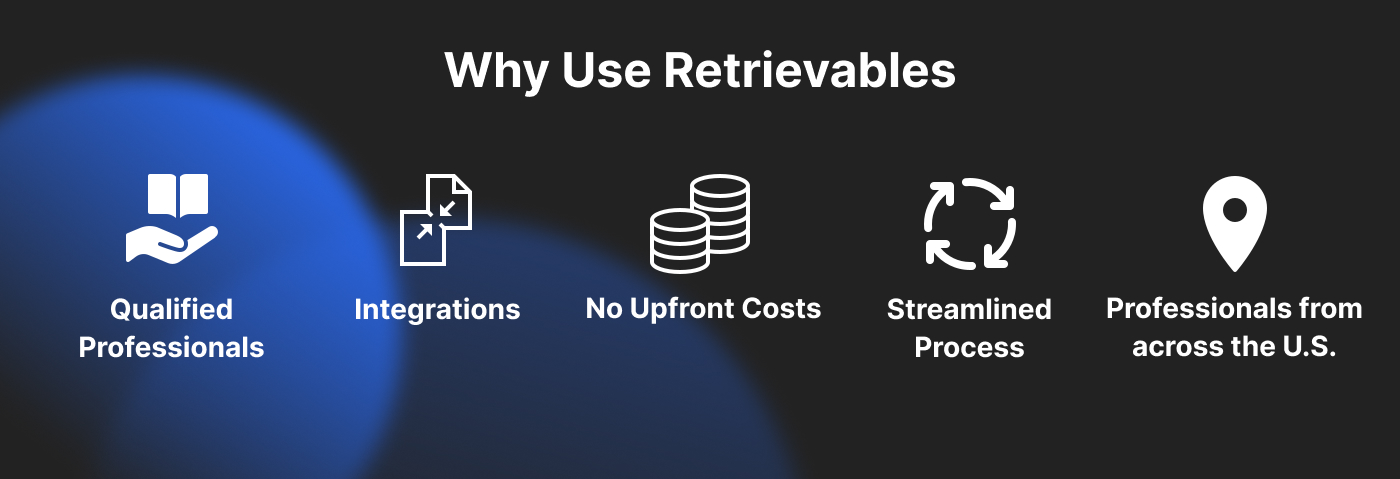
Retrievables was built around that distinction. Instead of asking a business to research and vet collection attorneys and agencies on its own, Retrievables connects businesses with the specific attorney or agency best suited to a given claim, based on jurisdiction, industry, debt size, and case complexity, rather than defaulting to whoever happens to be local. For businesses managing receivables across multiple states or industries, that matching process alone can be the difference between a debt that gets resolved efficiently and one that drags on for months with the wrong specialist attached to it.
What to Have Ready Before You Escalate
Whether you’re tightening your screening process or preparing to hand off a stalled account, a few things make the process faster on both ends:
- A complete invoice and payment history for the account
- Copies of the original contract or terms of service
- A record of all collection attempts and client communication to date
- Any partial payments, disputes, or promises to pay on file
- Current contact information for the responsible party at the client company
Conclusion
Late-payer risk isn’t eliminated by better instincts — it’s reduced by better process, applied consistently from the first invoice through the last resort. The businesses that protect their cash flow most effectively are the ones that treat credit decisions with the same rigor they apply to any other financial commitment, screen consistently, watch for early drift, and know exactly who to call when prevention alone isn’t enough.
FAQ
What’s the difference between screening for late-payer risk and debt collection?
Screening happens before credit is extended and focuses on preventing bad debt in the first place. Debt collection happens after a payment is already past due and focuses on recovering money that’s owed. A strong receivables strategy uses both.
How much financial history should I check before extending credit to a new client?
At minimum, trade references from two or three other vendors and a basic commercial credit check for any account above your internal risk threshold. Larger or higher-exposure accounts warrant a closer look at cash flow indicators, not just revenue.
When should a business stop handling collections internally and bring in outside help?
Once an account is significantly past due and internal follow-up has stalled, typically 60 to 90 days with no meaningful response, it’s usually more efficient to hand the account to a specialist matched to the debt’s jurisdiction and industry than to keep managing it in-house.